
Even today, it’s difficult to imagine a truly interconnected shopping experience—not just one where systems are integrated, but one where the entire journey feels intentional. A world where, at every step, the customer feels understood. Where expectations aren’t just met, but anticipated. Where store associates show up at the right moment, follow through consistently, and create a sense of continuity that feels human, not transactional.
In this kind of experience, you aren’t navigating a system—the system is responding to you. You have visibility, clarity, and control in real time, whether you’re in a physical store, on your phone, speaking with a call center, or engaging online. The experience feels seamless because it was designed that way—from the customer’s perspective outward.
“I would much rather blaze a trail than be blazed by the trail,” — John R. Miles
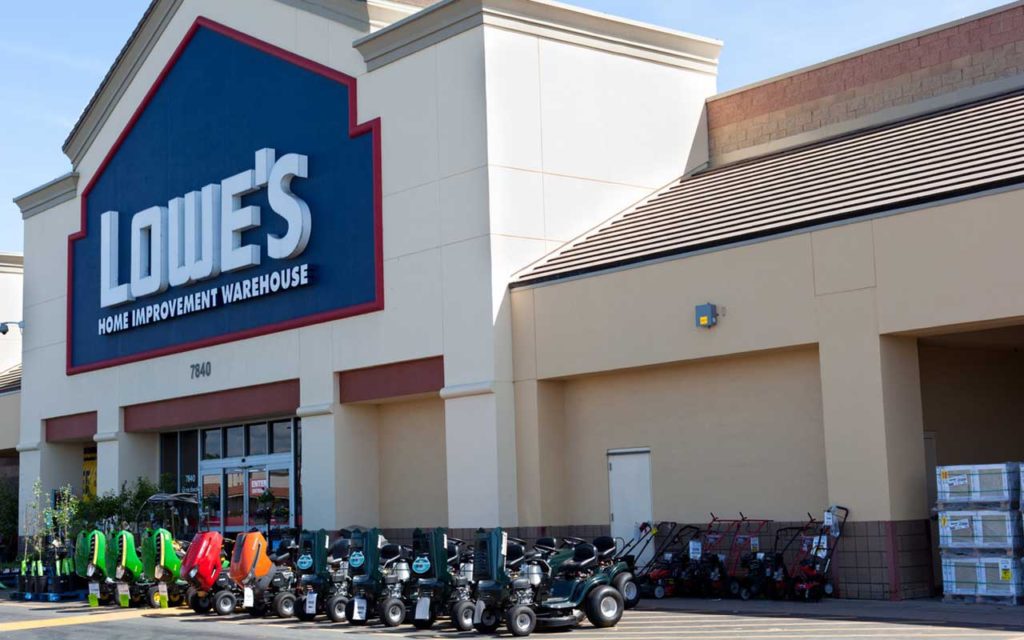
Now imagine this not today—but in the mid-2000s. A moment when this vision wasn’t theoretical, but already taking shape inside a Fortune 50 retailer. What follows is a firsthand account of one of the most significant narrowly missed opportunities in retail history: Lowe’s Home Improvement’s Total Closed Loop Selling Model and Strategy.
At its core, the ambition wasn’t just integration—it was intention. The goal was to design a seamless experience where customers felt known, supported, and confident at every stage of their journey. A system not built merely to transact, but to create consistency, trust, and loyalty through experience. A vision so forward-thinking that it foreshadowed initiatives like Home Depot’s multi-billion-dollar One Home Depot transformation.
As Wharton professor Marshall L. Fisher once observed, “The big enigma in retail has always been why a customer buys—what causes someone to pick something off the shelf, put it in their basket, and pay for it?”
Because beneath every transaction is a moment:
Did the customer feel guided or confused?
Seen or overlooked?
Confident or uncertain?
The closed-loop model sought to illuminate those moments. Not just what customers bought—but how they moved, how they decided, and what shaped their experience along the way.
By designing an interconnected experience, Lowe’s wasn’t simply capturing behavior—it was creating the conditions that influence behavior. Understanding not just what people do, but why they do it.
This wasn’t personalization for its own sake. It was the early architecture of something deeper: an experience that adapts to the individual, reduces friction, and builds trust over time.
What emerged was a glimpse into the future—where data, technology, and human insight converge not just to predict behavior, but to shape experiences customers return to because they feel right.
In essence, it wasn’t just about competing through intelligence.
It was about designing an experience customers could trust—one that, if fully realized, might have made them feel something rare in retail:
That they mattered.
What is an interconnected shopping experience?
An interconnected shopping experience is not simply a series of operational touchpoints—it is a deliberately designed journey where every interaction feels connected, intentional, and human. It is an experience where, across the entire lifecycle—from inspiration to fulfillment—the customer feels understood, supported, and guided.
In this model, engagement happens in real time, but more importantly, it feels seamless. Whether the customer is in a store, online, on a mobile device, or speaking with a call center, the experience remains consistent. Not because the systems are integrated, but because the experience has been designed from the customer’s point of view.
Transparency becomes trust. Continuity becomes confidence. And what could feel fragmented instead feels fluid.
Rajneesh Kumar, Associate Director, Pimcore, notes, “Frictionless shopping is what’s desired by today’s customers.” But frictionless alone isn’t enough. The deeper question becomes: does the experience feel cohesive, intuitive, and responsive to the human on the other side?
Consider the journey of a kitchen remodel.
This is not a transaction—it is a living, evolving experience. It begins with imagination: What kind of space do I want to create? What fits my budget? What reflects my life? From there, the journey expands into decisions about appliances, layouts, materials, colors, timelines, and execution.
Each step introduces complexity. Each decision introduces uncertainty.
And this is where experience design matters most.
Because what the customer needs in that moment is not just information, but guidance. Not just product options, but clarity. Not just availability, but confidence.
One of the most important lessons from this work was that customers don’t organize their thinking around products—they organize it around projects. Each project represents a unique journey, with its own sequence of needs, decisions, and dependencies.
Building a deck is not the same as repairing a pipe. Installing a home theater is not the same as remodeling a kitchen.
Each journey is distinct. And therefore, each experience must be designed to meet that specific context.
For associates, this meant something profound:
They were no longer simply product experts—they became experience stewards. Their role was to understand the full lifecycle of the customer’s project, anticipate needs, coordinate across functions, and create a sense of continuity from beginning to end.
And the complexity didn’t stop there.
A project might begin in one location—but be fulfilled in another. A kitchen designed in a primary home could be installed in a vacation property hundreds of miles away. This required not just system connectivity, but shared awareness across people, locations, and time.
The experience had to follow the customer—not the store.
How Lowe’s Approached This Vision
Lowe’s Total Closed Loop strategy, pioneered by CIO Steve Stone and his team, was not just a technology initiative—it was an attempt to design a fully interconnected experience from the customer’s perspective.
The ambition was bold:
To create a system where every participant in the journey—customers, associates, suppliers, fabricators, contractors—was aligned around a single, continuously evolving experience.
At its core, this model recognized a simple truth: No retailer can stock everything a customer needs. But a great retailer can orchestrate everything a customer experiences.
This meant enabling the ability to:
- Configure products to customer-specific needs
- Coordinate across multiple providers
- Adapt in real time as project conditions change
- Deliver consistently across channels
But more importantly, it meant something deeper:
Designing an experience that reduces uncertainty, builds trust, and creates confidence at every step.
From Data to Understanding
To achieve this, the system had to interpret behavior—not just record it.
It needed to recognize:
- where a customer was in their journey
- what decisions they were trying to make
- what support they needed next
This is where applied intelligence entered the equation.
Not simply to predict behavior—but to enhance experience.
Because the goal was never just personalization.
It was relevance.
It was clarity.
It was timing.
The Real Innovation
Total Closed Loop wasn’t just about connecting systems.
It was about connecting moments.
Each interaction—whether with an associate, a supplier, or a digital interface—became part of a larger narrative. A sequence designed not just for efficiency, but for coherence.
Yes, the architecture required:
- real-time orchestration
- order management
- workflow sequencing
- data standardization
But all of that complexity served a singular purpose:
To make the experience feel simple.
The Deeper Insight
At its best, this model pointed toward something much larger than retail innovation.
It revealed that:
Customers don’t return because systems work.
They return because experiences feel right.
Because they felt:
- guided instead of overwhelmed
- understood instead of processed
- confident instead of uncertain
In today’s language, we might say:
This wasn’t just an interconnected shopping experience.
It was an early attempt to design love into the customer journey.
Or, more precisely—
To create an experience where the customer feels like they matter.
Did Lowe’s create an interconnected shopping experience?
The simple answer is YES. And here are a number of accomplishments.
Envisioning, Navigation, and Search Capabilities
Lowe’s created a series of envisioning software tools allowing a customer to design their project either from the comfort of their home on Lowe’s eCommerce site or in the store. Stone, Lowe’s CIO, wanted to ensure that the solution was flexible and to allow different entry points during the customer journey.
 The reason for this is that a customer may start a bathroom project with a simple toilet replacement but then decides that they want to include new cabinets, flooring, bathtub, and shower in the mix. Lowe’s IT organization worked with the business to create these solutions that guided the consumer through the process. The solutions provided the consumer with a visual representation of the final project with approximate price range estimates based on their preferences.
Additionally, the in-store selling system received numerous upgrades and lowes.com was completely rebuilt to complement the process and moved from an in-home-built solution to an industry-leading eCommerce platform from IBM. Both used to capture customer touchpoints along the envisioning, product search, and shopping process.
The overhauls to Lowes.com were significant and designed to make the eCommerce presence a natural extension of the store. The end solution provided consistent communication, status, visibility, order status, expectation changes, and enhanced insights into expected delivery and/or installation.
Lowe’s goal was to optimize search and navigation functionality both in the store and online and to make it easier for a consumer to shop. They did this by deploying visual enhancements to merchandising, new planning and merchandise re-set capabilities, a cross channel shopping cart, an initiative that integrated merchandise planning with the supply chain, pipeline management, and improvements to store signage. The company also built sales specialist scheduling and calendaring tools both in-store and online. These enabled consumers to schedule appointments either in the store or in their homes. All of this was monitored and tracked with customer touchpoint workflow.
Lowe’s launched extensive product finder pilots in their innovation lab to examine ways to enable a more natural in-store search. The company also deployed mobility devices into the stores to enhance the store associate’s ability to provide customers immediate answers to their questions with how-to-information.
All these advancements allowed Lowe’s to capture the initial customer touchpoints, record them, and through artificial intelligence score the probability of the customer opportunity. Ultimately, they significantly improved the service to the consumer.
Applied Intelligence Innovation
Another example was around advancements Lowe’s made in big data, business analytics, AI, and master data management disciplines. For the Total Closed Loop Selling Model to work, the company’s underlying data assets required standardization and centralization. The goal was to provide a seamless way to obtain centralized and accurate information regarding location, product content, product attributes, service catalogs, pricing, location data, and the customer. The organization built one of the most advanced applied intelligence capabilities of any business with a robust Master Data Management (MDM) architecture, middleware platform, business analytics, and Enterprise Information Management (EIM) strategy.
The implementation of a master customer database was critical to the success of the project. Dubbed the single view of the customer (or 360-degree view of the customer), the initiative standardized all information about a Lowe’s customer into a single repository. In other words, every touchpoint with the customer, their location, their interests, credit card transactions, their projects, their past purchases centralized into one place. It is an essential function of providing a consistent and standardized customer experience.
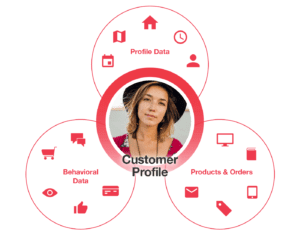
The single view of the customer project was a groundbreaking achievement, producing over 90% accuracy without a retail loyalty program of any kind. This solution provided Lowe’s associates and the marketing organizations with the means to know if you were shopping in your home store if you were at your second home, a vacation rental, or on vacation and to knowingly and uniquely market and service to your needs. It allowed Lowe’s employees the ability to analyze past consumer behaviors to target consumers with marketing and personalize their future customer interactions.
In other words, Lowe’s had an authoritative overview of every action their customer’s performed and the ability to predict them. And, if we knew when a customer’s project was commencing, we could capture the entire project revenue stream or a major portion of it.
In addition to the single view of the customer, an interconnected shopping experience also requires additional data on products and services that are standardized and grouped by end-user applications into categories. Think of these as things like flooring, a washer, and dryer, refrigerators, Halloween, or Christmas decorations.
There also needs to be attributes of the products and services that provide details about each item. Called product-specific selling attributes, these are physical, character, and personality traits such as color, dimensions, safety measures, and quality. All of these categories and attributes aid the consumer in making an informed decision.
For omnichannel marketing success, a centralized database of location and pricing data is required, so Lowe’s Home Improvement knows where all products are at all times and their pricing.
Lowe’s created all these data repositories for product content management, product-specific selling attributes, location, pricing, merchandise, and service that were all built and delivered in unison to the single view of the customer, business analytics, EIM, and master data management capabilities mentioned above.
Supply Chain, Order Management, and Specialty Sales Innovation
Lastly, to enable an interconnected shopping experience, a retailer needs a robust and flexible supply chain ecosystem with the ability to have configurable and specialty selling solutions. Lowe’s was one of the first if not the first major retailer to enable online orders to be obtained by customer preference – either at your home or in-store pickup. Led by supply chain leader Britt Dayton, this flexible fulfillment capability significantly accelerated order processing and shipping. It was instrumental in growing lowes.com revenue by 70%.
Lowe’s decades-old in-store selling system ironically called “Genesis” is the cornerstone behind this capability. It provides the retailer with the ability to understand real-time inventory levels and proximity to the customer’s location. Around this core system, which is still in use today, Lowe’s rebuilt almost every supply chain system and process in the company – transportation, logistics, supply chain planning, warehouse management, analytics, the way we picked product, and imports to name a few.
And, in conjunction, Total Closed Loop added a centralized order management module. The order management solution is critical because the system manages the order and its touchpoints from the initiation of the sale through delivery to the customer. This form of order management was a retail breakthrough. It built formalized relationships between order components designed to enter into an event engine with linkages between the products and services. It enabled order tracking and status visibility throughout the entire process across all channels and all levels. This functionality combined with vastly enhancing supply chain cycle times, accuracy, and flexible fulfillment created a major competitive advantage.
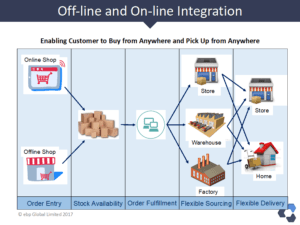
Lowe’s built a specialized sales process workflow to augment the order management system. The sales process consisted of unique specialty selling solutions that allow customers to order millions of products not stocked in any specific store with real-time visibility. These items display to the consumer in the form of catalogs that I referenced before.
The merchandise and associated services require everything from simple to complex configurations and associated related items. For instance, if you are redoing your shower, you need the associated elements of the shower pan or tub, the faucet, shower head, curtain, and tile. The specialized sales process workflow and supply chain ecosystem ensure that each step of the omnichannel customer experience completes in an accurate, timely, and repeatable manner.
What are the Lessons Learned From this Massive Undertaking?
Lowe’s was significantly ahead of the retail industry and the idea of frictionless shopping when it deployed all these capabilities in the 2006-2009 time frame. So, the obvious question you are probably asking yourself is, “why don’t you as a consumer experience this when you go to Lowe’s Home Improvement today?”
As I mentioned above, there are numerous aspects of the omnichannel customer experience, order management, eCommerce, selling solutions, merchandising, mobile solutions, supply chain, and the data architecture that were successfully delivered. However, a few of the critical capabilities were not completed in their entirety, while others failed to achieve optimum user adoption or maturity to the envisioned levels.
But, most importantly, over time, many of the solutions built during this initiative were not properly understood, maintained, and enhanced. You simply can’t create a platform like this and not continually strive to build upon and improve its capabilities.
Many of these solutions were groundbreaking. At that time, some were more mature in the overall software marketplace than others. Because of the newness of cloud computing, the decision was made, due to security and privacy concerns, to depend on some of the old legacy systems and lack of interoperability. I believe this was likely a foundational error that required continual complicated code changes and customization. Based on what I have read both in investor meetings and in the press, it appears the Home Depot is also facing many of these same legacy issues in their current attempt at creating a seamless omnichannel customer experience.
Lowe’s relied heavily on a start-up software partner in the creation of the core selling solution, content, event, and order management capabilities. Although the software company was a trustworthy partner and delivered significant aspects of the core selling and order management solutions, I believe they failed to realize the scale and enormity of the task at hand. There were many cost overruns, missed deadlines, and core capabilities that did not deliver expectations. The most significant functionality that lagged being the event management engine envisioned to operate on sequential or event triggers. The solution needed to be able to build dependencies, leverage store associate interface, and ultimately automate actions with AI. It was the very foundation of closing the closed-loop. This cast doubt at Lowe’s on the viability of the vendor which in turn caused doubt about the viability of the solution.
The omnichannel customer experience had many different and diverse components that cut across the entire company. The approach consisted of over forty separate multi-million/year programs that needed delivery over a larger roadmap of five to eight years. Although Lowe’s assigned various senior business heads to the project, not one was singularly in charge. This resulted in Stone and Scott Butterfield, an SVP in Lowe’s strategy team, continually re-convince their peers about the essential criticality of the strategy and its long-term importance to the company.
The constant change in business leadership and positioning within the old boy’s network led to consistent delays. As a result, many of the core leaders assigned to the initiative, including Butterfield and Stone himself, left the company or were re-assigned to different priorities creating knowledge gaps that exist to this day. I would argue that if Lowe’s appointed a top singular business leader at the onset (such as the Chief Marketing Officer or Chief Customer Officer) to co-lead the charge with Lowe’s CIO, Stone, the outcome would have been different.
Lastly, there were some adoption issues with the store associate’s willingness to take on these advanced capabilities and to train them on their functionality correctly. Lowe’s has over 400,000 associates so it is a massive logistical training challenge. A few of the systems, especially the Made-to-Order (M2O) selling platform, were not well received by the store associate community due to inconsistent training, not fully understanding the capabilities of the system, and, in other cases, the complexity of the execution process.
What is its legacy on the war between Lowe’s and the Home Depot?
Being a trailblazer is not for those who lack courage, and like any entrepreneurial endeavor, it requires a steadfast resolve and commitment to the problem at hand. Lowe’s had some of the most accomplished executives in retail during my tenure with the company. That said, I often find that you have to lead from the front when undertaking something this significant. The IT and strategy groups within Lowe’s played a major role in trying to keep the project moving but the entire organization needs to become passion struck to conquer the unconquerable, starting with its leader.
Often, the end goal can be hard to comprehend because of its enormity and complexity. I believe this was in part the case with Lowe’s at that time. Although the Total Closed Loop Selling Model had initial top executive support, it failed to ever gain traction in becoming Lowe’s number one priority. I contrast that with the Home Depot where CEO Craig Menear is making it their number one priority and focusing $11 Billion on its creation. Lowe’s spent a small fraction of that amount.
The chance to achieve the holy grail of a truly seamless interconnected shopping experience was in grasp but trumped by other significant initiatives, international expansion, and a focus on do-it-for-me services. Even today, Lowe’s still retains much of this vast array of capabilities. Ultimately, it is up to the new leadership team led by Marvin Ellison to chart its next course.
I would encourage them to dust off the Total Closed Loop Selling Model patent and leverage it as the Home Depot appears to be doing.
What is its legacy on retailers’ pursuit of an interconnected shopping experience?
I believe the Total Closed Loop Selling Model set the trail and benchmark for others to follow. It was well ahead of its time. Although others are trying, most notably the “One Home Depot” initiative, I am not aware of another retailer who has completely implemented it yet today. I think Amazon Go may offer the best opportunity for ultimate success. Much of this reasoning is because of Amazon’s technical prowess, its understanding of the customer journey, research and development budget, supply chain scale, and immense data capabilities.
During the course of the Total Closed Loop Selling Model, we received significant interest from other retailers, consultants, Forrester, Gartner, and software vendors over its novelty and ground-breaking approach. Countless news media also unsuccessfully requested to write about it given Lowe’s private nature. This included Paco Underhill, founder, and CEO of retail research company Envirosell and author of Why We Buy: The Science of Shopping.
“You can’t compete against the past, you’ve got to compete against what the future is going to be. I see retail changing so much from inventory, from the customer, and even the whole level of personalization that we’re trying to offer to the customer now. The customer is going to be asking for things that we would never have dreamed possible and yet in a few years we’re going to be delivering it,” Steve Stone, Former CIO of Lowe’s and Limited Brands
This quote from Stone in 2018 reveals a lot about his thinking back in 2003. One thing is for sure. Seamless omnichannel customer experiences will not be a “nice to have” option in the future. I argue it will be an omnipresent experience across retailers. Customers expect and in the future will demand hyper-personalization. The first movers (like Lowe’s and Amazon) will have a significant advantage if the strategy is executed and frictionless shopping becomes reality.
In the end, I would much rather blaze a trail than be blazed by the trail. And that was unquestionably the case here.
———-
I remain incredibly proud of my tenure with Lowe’s Home Improvement and what the fantastic teams in the information technology department, our business partners, service providers, and software vendors accomplished. During this account, I was a Vice President and responsible for leadership over software development, business intelligence, MDM, middleware, lowes.com, operations, marketing technology, and quality teams. Streamlining the customer journey and exceeding the consumer’s expectations were always at the center of the Total Closed Loop initiative.