

The corner office looks exactly like you imagined. The title on your business card carries weight. Your calendar is packed with meetings that matter to the bottom line. Yet somewhere between the morning coffee and the evening commute, a question surfaces that won’t go away: “Does any of this actually matter?”
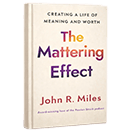
Psychologists call it your sense of mattering—the bone-deep conviction that your existence makes a meaningful difference to the people and world around you. And for high achievers, it is the most quietly devastating thing to lose, because nothing in the achievement itself tells you it’s gone until the silence gets loud enough.
You are not alone in this feeling. Across boardrooms, executive suites, and high-rise offices, successful professionals are wrestling with an uncomfortable truth. They have achieved what they set out to achieve. They have climbed the ladder, earned the recognition, and secured the lifestyle. And still, something fundamental feels missing.
That missing piece is this: a sense of mattering that no title, salary, or quarterly report can manufacture. Without it, success becomes a treadmill that gets faster but never actually takes you anywhere that feels like home.
What Makes People Feel They Matter
You close the biggest deal of your career. The congratulations pour in. Yet that night, staring at the ceiling, something feels off. The triumph feels hollow, like eating a meal that looks perfect but has no taste.
This disconnect happens because success and the sense of mattering are not the same thing. You can climb to the top of your field and still feel invisible. You can accumulate wealth, status, and recognition while feeling fundamentally insignificant.
The sense of mattering operates on three levels:
Awareness: Your presence registers with others. People notice when you walk into a room, not because of your title, but because you genuinely matter to them.
Importance: Your well-being is tied to someone else’s emotional investment. People care what happens to you beyond what you can do for them.
Reliance: Someone depends on you for something that cannot be easily replaced. Your specific contribution is necessary, not just convenient.
Strip away any of these three, and you end up with relationships and work that feel transactional. You become a function rather than a person, a resource rather than a human being.
Why Successful People Still Feel They Don’t Matter
The paradox of success without significance is more common than many realize. High achievers often find themselves in situations where they have:
- Transactional Relationships: Professional networks built on utility rather than genuine connection
- Performance-Based Worth: Identity tied exclusively to achievements rather than inherent value
- Isolation at the Top: Leadership positions that create distance from meaningful peer relationships
- Mission Misalignment: Work that generates income but lacks personal meaning or social contribution
The Impact on Leadership and Organizational Culture
Leaders who struggle with their own sense of significance often inadvertently create cultures where others feel equally insignificant. This creates a cascade effect throughout organizations:
- Decreased employee engagement and motivation
- Higher turnover rates among top talent
- Reduced innovation and creative problem-solving
- Compromised mental health and increased burnout
Forward-thinking organizations now recognize that addressing this fundamental human need is not just a personal development issue but a strategic business imperative. This realization has led many companies to seek guidance from experts who specialize in leadership psychology and organizational well-being.
How Leadership Speakers Address the Mattering Crisis
The growing awareness of this issue has created demand for thought leaders who can help organizations navigate these complex psychological territories. A business keynote speaker who understands these nuances can provide frameworks that transform how companies approach culture, leadership, and employee development.
When organizations bring in a conference keynote speaker to address these themes, they signal to their teams that human significance matters as much as business outcomes. These presentations often serve as catalysts for deeper organizational conversations about purpose, values, and what truly drives sustainable success.

Key Themes Addressed by Leadership Experts
Motivational leadership speakers who focus on human significance and purpose typically explore several interconnected themes:
- Authentic Leadership: Moving beyond role performance to lead from a place of genuine connection and shared humanity.
- Purpose-Driven Organizations: Aligning business objectives with contributions that extend beyond profit margins.
- Psychological Safety: Creating environments where people feel seen, valued, and essential to collective success.
- Legacy Thinking: Shifting focus from short-term wins to long-term impact that outlasts individual tenure.
Building Your Sense of Mattering
While organizational culture plays a significant role, individuals can also take proactive steps to cultivate stronger feelings of mattering in their professional and personal lives.
Strategies for Enhancing Your Significance
| Strategy | Description | Expected Impact |
| Mentor Others | Share your knowledge and experience with those earlier in their journey | Creates reliance and demonstrates your value to others’ growth |
| Contribute to Causes | Engage with work that serves a purpose beyond personal gain | Builds awareness of your positive impact on the world |
| Deepen Relationships | Invest in genuine connections beyond transactional networking | Increases importance and mutual caring in your social sphere |
| Document Your Impact | Keep track of how your work affects others positively | Provides tangible evidence of your significance |
| Seek Feedback | Regularly ask how your contributions help others | Reveals the ways you matter that you might not see yourself |
| Volunteer Your Skills | Apply your professional expertise to community needs | Demonstrates reliance while connecting to broader purpose |
Questions Worth Asking Yourself
Stop reading for a moment. Answer these questions honestly:
- When do you feel most alive and valuable?
- Who genuinely relies on you, and for what?
- What contributions are you making that will outlast this week, this quarter, this year?
- If you disappeared tomorrow, what would actually be lost that could not be replaced?
These questions cut through the noise of daily achievement. They expose the difference between being busy and being necessary, between being successful and being significant.
Most professionals discover something uncomfortable through this reflection. They have built careers optimized for external validation while neglecting the internal work of connecting to genuine significance. They have relationships based on utility, work based on obligation, and days filled with activity that serves no larger purpose they actually care about.
Reconnecting Achievement with Meaning
The solution to success without significance is not to abandon achievement but to ensure that what you achieve is connected to what genuinely matters. This requires several mindset shifts:
- From Competition to Contribution: Measuring success by how much you give rather than how much you accumulate or surpass others.
- From Recognition to Impact: Valuing the actual difference you make over the acknowledgment you receive for it.
- From Independence to Interdependence: Embracing the ways you need others and they need you, rather than striving for total self-sufficiency.
Organizations that embrace these principles create environments where people can pursue excellence while maintaining a strong sense of significance. This approach does not diminish standards or reduce expectations; rather, it ensures that high performance is sustainable because it is rooted in meaning.
Your Brain on Mattering
Your brain does not care about your job title. It does not release reward chemicals when you get promoted unless the promotion is connected to something deeper. When you feel that you genuinely matter to someone, your brain lights up with dopamine and serotonin, the same neurochemicals that drive motivation and contentment.
The opposite is equally powerful. Chronic feelings of insignificance trigger your stress response system. Your body reacts to feeling invisible the same way it reacts to physical threats. Cortisol floods your system. Your immune function drops. Your decision-making capacity diminishes.
This is not metaphorical. Brain imaging studies show that experiences of significance activate reward pathways, while experiences of invisibility activate threat pathways. Your biology treats feeling valued as essential, not optional.
This explains why you can push through temporary stress when your work feels significant, but burn out quickly when it feels meaningless. Your brain is wired to seek significance the same way it seeks food and safety. Ignore this need long enough, and your system will eventually force you to pay attention through exhaustion, illness, or crisis.
Creating Cultures Where People Feel Significant
For business leaders, the challenge is translating personal insights about mattering into organizational practices. This requires intentional cultural design that prioritizes human significance alongside business results.
Practical Approaches for Leaders
- Regular Recognition of Contributions: Not just for major achievements, but for the daily actions that keep organizations running effectively.
- Transparent Impact Communication: Helping team members see how their work connects to larger outcomes and serves real people.
- Investment in Development: Demonstrating that people matter by investing resources in their growth, not just their current productivity.
- Inclusive Decision-Making: Creating opportunities for diverse voices to influence direction, showing that perspectives matter.
- Celebration of Service: Highlighting examples of how team members help each other, reinforcing interdependence and mutual reliance.
These practices create environments where significance is woven into the fabric of daily work rather than being an occasional topic addressed in annual retreats or training sessions.
The Connection Between a Sense of Mattering and Sustainable Success
Research consistently shows that organizations with strong cultures in which people feel valued outperform their competitors across multiple dimensions. They experience:
- 31% lower voluntary turnover
- 27% higher profitability
- 40% higher quality of work product
- 50% lower safety incidents
- 63% lower employee burnout
These metrics demonstrate that helping people feel significant is not soft or peripheral to business success; it is central to it. Organizations that ignore this dimension do so at their peril, potentially undermining their competitive position in talent markets and innovation capacity.
The question for leaders is not whether to address this need, but how to do so authentically and effectively. This often requires challenging deeply ingrained assumptions about what drives performance and what creates value.
Moving Forward: Integrating Significance into Your Life and Work
The journey toward a robust sense of mattering is ongoing rather than a destination to be reached. It requires continuous attention to how we show up in our relationships, what we prioritize in our work, and how we define success.
For individuals, this might mean making difficult choices about career paths, accepting opportunities that offer meaning over maximum compensation, or investing time in relationships and causes that will never appear on a resume.
For organizations, it requires commitment to building cultures where people feel genuinely significant, where contributions are recognized, and where the human dimension of work receives the same strategic attention as financial performance.
The good news is that creating significance is a renewable resource. Unlike financial wealth or status, which can be lost or diminished, the feeling that you matter can be cultivated and strengthened throughout your life, regardless of external circumstances.
Conclusion
You can have the corner office and still feel like you are standing in an empty room. You can achieve everything on your list and still wonder if any of it mattered. This is not failure. This is what happens when you optimize for success without accounting for significance.
The sense of mattering is not something you achieve. It is something you build through daily choices about where you invest your attention, who you show up for, and what you contribute that extends beyond yourself. It requires looking past the metrics that dominate your performance reviews to ask harder questions about the difference your existence actually makes.
The organizations that thrive in the coming decades will be those that figure out how to create cultures where people feel genuinely significant. The professionals who sustain their success will be those who refuse to settle for achievement without meaning.
Your next promotion will not fix this. Your next raise will not fill this gap. The only way to address the absence of mattering is to deliberately build it into the architecture of your life and work.